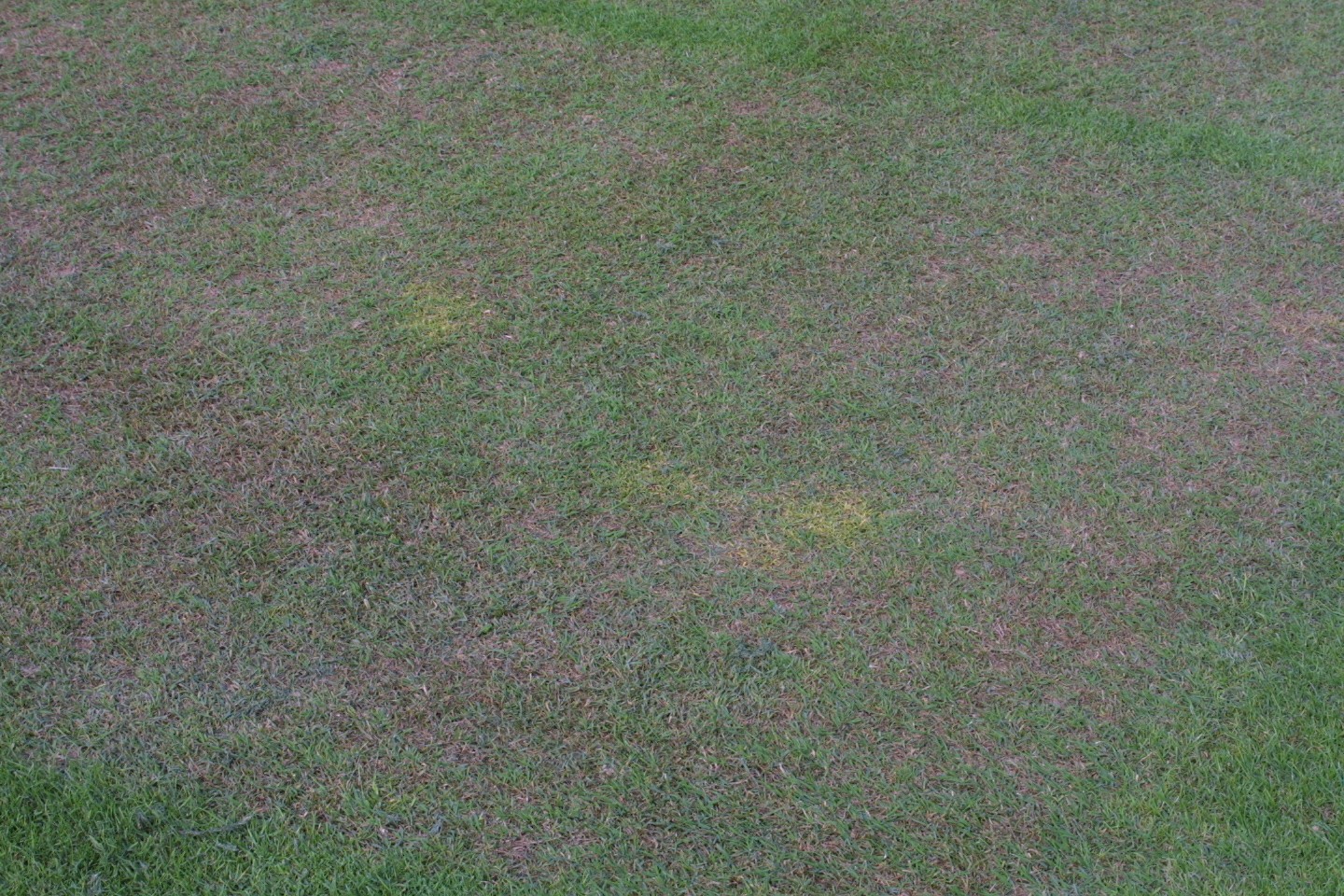
Poa annua is one of the most disruptive weeds in managed turf because it affects appearance, playability, maintenance timing, and long-term control strategy all at once. If you misidentify it, you risk choosing the wrong control window, wasting inputs, and accelerating recolonization.
This guide explains how to identify Poa annua quickly in the field, understand its life cycle, assess its impact on turf performance, and build a practical management strategy based on prevention, suppression, and replacement.
Identification: Confirm Poa annua in 5 Minutes
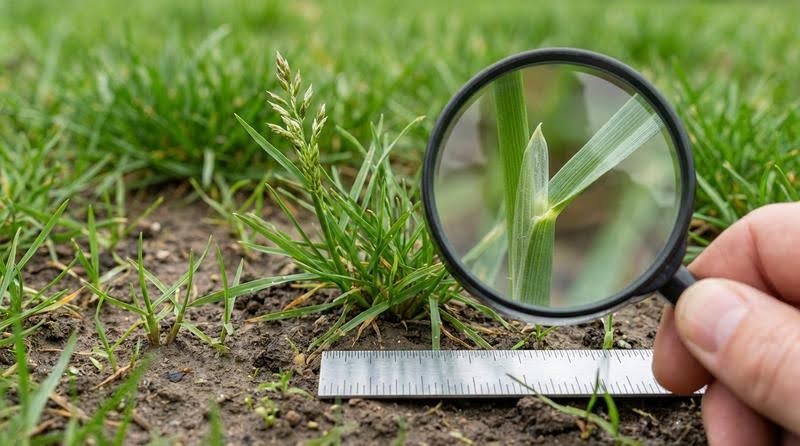
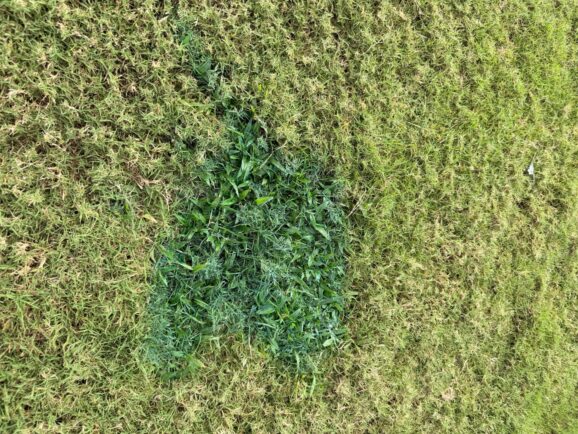
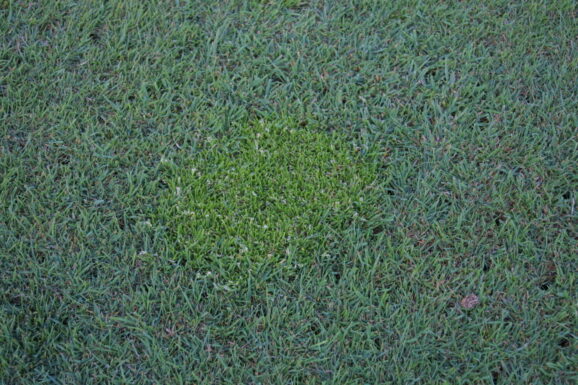
Start at eye level and scan the turf for small, irregular patches and abundant spring seedheads. One of the first clues is the flowering structure, or panicle, which is often visible and typically measures about 1 to 4 inches long. If you see many short, loose seedheads concentrated in lighter or patchy areas, note that as your first positive trait.
Next, kneel down and inspect how the plant grows. Poa annua is usually clump-forming. If unmowed, plants reach roughly 6 to 8 inches tall, or if you observe tight bunches rather than a smooth, uniform sod, record that as another strong indicator. This matters because even isolated clumps can seed heavily: individual plants may produce roughly 100 seeds in as little as 8 weeks.
Use a hand lens to examine the leaves more closely. Look for a boat-shaped, concave leaf tip and a long membranous ligule where the blade meets the sheath. These are repeatable, field-usable traits can be relied upon for quick identification.
For even more confidence, inspect the flower and seed structures. Open a floret gently. The palea is the thin inner bract tucked behind the lemma; in simple terms, it is the small papery structure that cradles the flower. The caryopsis is the grass seed or grain that develops after flowering. Photograph these structures and collect 3 to 5 plants from across the patch so you can compare traits before making control decisions.
Quick confidence score
Tally the following five traits:
- -> Seedheads 1 to 4 inches long
- -> Bunch-type or clump-forming growth
- -> Unmowed height of roughly 6 to 8 inches
- -> Boat-shaped leaf tip
- -> Visible palea or caryopsis
Interpretation:
- -> 0 to 2 traits: unlikely
- -> 3 out of 5: likely
- -> 4 to 5 traits: confident identification
Always support field ID with photos and multiple samples before deciding on a management action.
Poa annua vs. Kentucky Bluegrass vs. Poa trivialis
Correct identification matters because these species require different timing and management strategies.
| Trait | Poa annua | Kentucky bluegrass (Poa pratensis) | Poa trivialis |
| Leaf tip | Boat-shaped, concave, diagnostic | Tapered or acute, not strongly concave | Narrow, often glossy and soft |
| Ligule | Long, membranous | Short, membranous, truncate | Membranous, sometimes noticeable but usually shorter than Poa annua |
| Growth habit | Bunch-type, sometimes with stolons; clump-forming | Sod-forming via rhizomes | Creeping via stolons; patch-forming in moist turf |
Seedhead timing and size | Spring seedheads, 1 to 4 inches long; prolific seeder | Flowers in late spring to early summer; less dense seedhead display | Spring seedheads, often in shaded or moist sites |
Palea / caryopsis notes | Palea visible; a single plant may produce about 100 seeds in as little as 8 weeks | Palea present; generally fewer seeds per plant than annua | Palea present; seed output typically lower than annua |
Preferred soil moisture | Moderately moist to wet; germinates as soil cools below 70°F in late summer or fall | Well-drained soils with moderate moisture | Prefers wet, shaded soils |
Heat / summer survival | Often declines or dies back in summer; sometimes behaves as a weak perennial | More heat tolerant among cool-season turf species | Poor summer survival; declines in heat |
Confusing these species shifts your control window. Poa annua germinates in fall as soil temperatures drop below 70°F, produces seed quickly, and is associated with documented herbicide resistance. Those traits require different timing and best management practices (BMPs) than perennial Kentucky bluegrass or stoloniferous Poa trivialis.
Soil Temperature and Seasonal Timing: The Complete Poa annua Calendar
Fall: Primary germination window
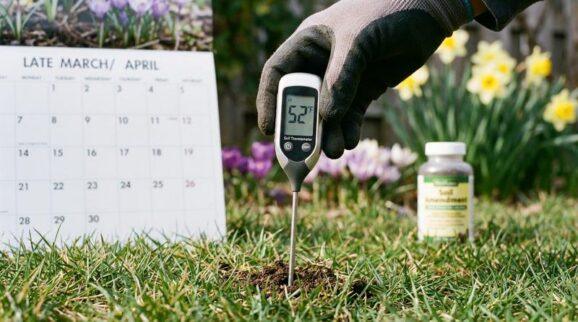
As soil temperatures fall below 70°F, Poa annua enters its main germination period. Scout bare or thin turf areas when the top 1 to 2 inches of soil are in the 50 to 70°F range. This is when you are most likely to see flushes of small seedlings before winter.
Actions at this stage should focus on reducing future seed pressure. Apply timely pre-emergent treatments where appropriate, adjust irrigation to reduce favorable moist microsites in late summer, and document recurring problem areas for winter and spring follow-up.
Winter: Establishment and mapping phase
Plants that established in fall usually continue slow growth through cool months. During winter, look for dense clumps and early tillering rather than large seedhead production.
This is a good time to map populations, improve drainage where needed, and avoid heavy seeding directly into known Poa annua patches. Instead, prioritize competitive turf establishment strategies that help desirable species fill space and reduce overwinter survival.
Spring: Seedhead production and spread
Spring is the major seed production period. Expect panicles 1 to 4 inches long and rapid seed set. Because a single plant can produce about 100 seeds in as little as 8 weeks, suppressing or removing seedheads quickly can significantly reduce future pressure.
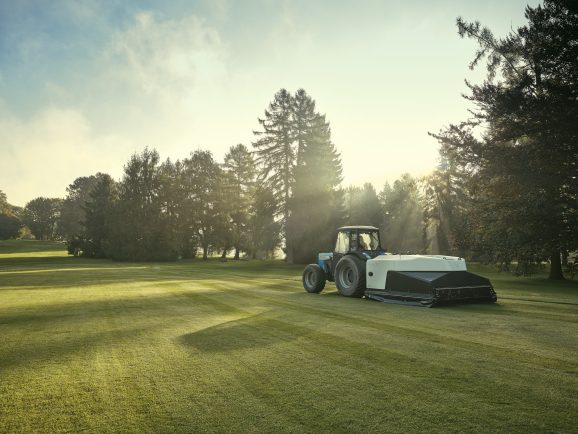
Management at this stage may include mowing adjustments, rolling, light verticutting, and targeted spot control. Broad, untargeted treatments are usually less efficient, especially where resistance issues are a concern.
Summer: Decline, mortality, and opportunity
In hot, dry soils, Poa annua often declines or dies back. This creates an opportunity to strengthen desirable turf and reduce recolonization. Use irrigation management, improved canopy density, and competitive species recovery to take advantage of this natural weakening.
Throughout the year, base decisions on measured soil temperatures, soil moisture content and local seasonal patterns. Timing is one of the most important variables in reducing long-term Poa annua pressure.
Seed Biology, Palea/Caryopsis Details, and Seedbank Persistence
The reproductive biology of Poa annua explains both its fast spread and its persistence. The palea is the thin inner bract behind the lemma, and it helps protect the reproductive structure. The caryopsis is the true seed or grain produced after flowering.
Because a single plant can produce about 100 seeds in as little as 8 weeks, and because the flowering panicle is relatively small, dense infestations can generate a large seed rain very quickly. Once seeds are released onto or near the soil surface, they contribute to a seedbank that supports future infestations when soils cool again in fall.
Seedbank behavior depends on multiple factors, including burial depth, compaction, soil disturbance, and moisture. Shallow burial and loose soil often favor emergence. Compaction, repeated mowing, traffic, and disturbance can change where seeds sit in the profile and influence both mortality and new flushes.
Both unmowed and mowed plants can produce seed heads, although much easier for unmowed plants, preventing plants from reaching full seed-producing stages can sharply reduce future pressure.
Practical ways to reduce seed set
- -> Remove or suppress panicles before seeds mature
- -> Time early seedling management to soil temperature prone for peak germination
- -> Limit late-season irrigation that maintains a shallow rootzone and active seedbed
- -> Reduce unnecessary disturbance in infested areas
- -> Document persistent patches for follow-up across seasons
This approach helps reduce reliance on chemical control and lowers long-term seedbank pressure.
Turf Impact: What Poa annua Does to Performance, Appearance, and Health
Poa annua affects turf on several levels.
Appearance
Its lighter green color and tufted growth create visible contrast against a more uniform turf canopy. In spring, dense seedhead production makes this contrast even more obvious and can reduce the visual quality of the surface.
Structure
Because Poa annua is shallow-rooted and often clump-forming, it contributes to thin, patchy turf. This irregularity increases the risk of scalping under close mowing and creates uneven surface texture.
Stress response
The species performs well in cool, moist conditions during fall through spring, but it often declines in hot, dry summer weather. That seasonal dieback leaves voids, which reduce density and open space for reinfestation if desirable turf does not recover quickly.
Operations and cost
Its heavy seed production, rapid recolonization, and resistance-related management issues make Poa annua more than just an aesthetic weed. It can reduce wear tolerance on sports turf, increase maintenance inputs on golf and fine turf surfaces, and force repeated monitoring and renovation work.
Integrated Management Framework: Prevent, Suppress, Replace
The most effective strategy is not a single treatment. It is an integrated cycle built around prevention, suppression, and replacement.
Prevent
Focus first on making conditions less favorable for fall germination. Since Poa annua begins germinating as soil temperatures fall below 70°F, late-summer and early-fall management is critical.
Raise mowing height modestly where appropriate to favor deeper-rooted desirable turf and reduce scalping around clump-forming plants. Shift irrigation toward deeper, less frequent cycles to strengthen desirable turf roots and reduce shallow, moist areas that favor Poa annua. Aeration can also help relieve compaction and disrupt the soil conditions this weed exploits.
Suppress
In spring, remove or suppress panicles before they mature. Even though the panicle is only 1 to 4 inches long, the seed output per plant can be substantial. Mechanical suppression (i.e. mowing) can reduce seed input in a meaningful way.
Time spot treatments carefully and align any chemical inputs with mapped populations and realistic goals. Broad applications should be used strategically, not reflexively.
Replace
After summer decline and thinning, overseed with competitive cultivars suited to your turf system and seasonal establishment window. Support desirable turf with fertility and cultural practices that strengthen it during its optimal growth period rather than unintentionally favoring Poa annua reproduction.
This prevent-suppress-replace cycle aligns turf management with soil temperature, irrigation, canopy competition, and expected seasonal decline.
FAQ: Poa annua Identification, Timing, and Control
What is Poa annua?
Poa annua is a winter annual grass that usually grows in bunches and reproduces mainly by seed, though some biotypes may also spread by stolons. Key identification features include boat-shaped leaf tips, a long membranous ligule, and abundant seedhead production.
When does Poa annua germinate?
It typically germinates in late summer through fall as soil temperatures fall below 70°F. Monitoring the top 1 to 2 inches of soil temperature helps identify the main emergence window.
When is the beste time to treat it?
That depends on your objective. For prevention, act before soil temperatures drop below 70°F in late summer or early fall. For suppression, focus on spring seedhead production and target plants before heavy seed set occurs.
Does Poa annua die in summer?
It often declines in hot, dry summer conditions, especially in exposed turf. However, it may persist in irrigated, shaded, or otherwise favorable microsites.
How do I stop it from producing seeds?
Reduce seed production by removing or suppressing panicles before seed set, improving turf competition, managing irrigation carefully, and responding early to new seedlings in known problem areas.
Final thoughts
Managing Poa annua successfully starts with correct identification and good timing. If you understand when it germinates, how it spreads, and why it disrupts turf quality, you can build a strategy that is far more effective than reacting after seedheads appear.
Use field traits for fast identification, track soil temperature through the year, reduce seed production wherever possible, and rely on an integrated program that strengthens the turf you want rather than focusing only on the weed you want to remove.