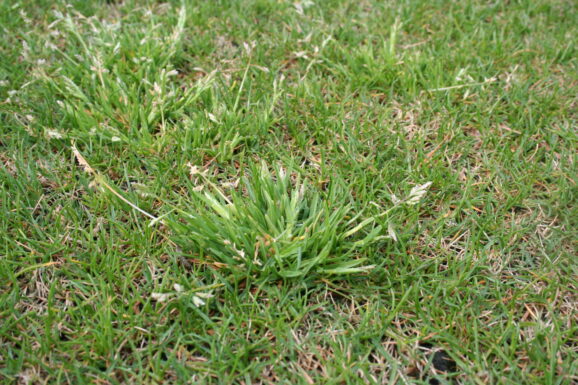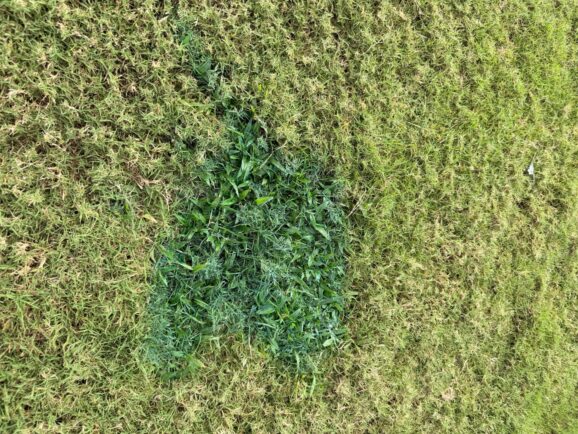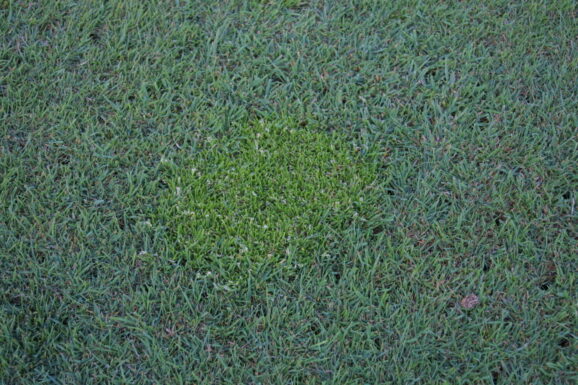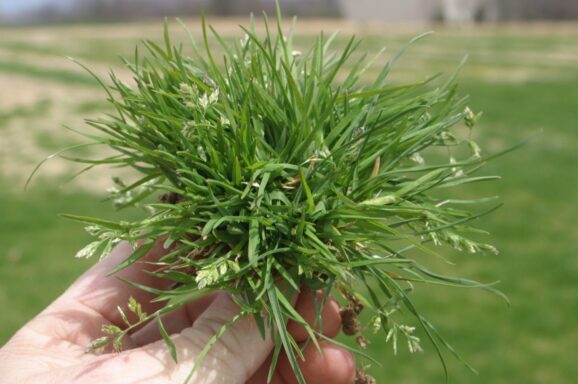
Poa annua on golf greens is ultimately a strategic decision. Any superintendent who has fought annual bluegrass knows the fight rarely ends, and the real question shifts from how to kill it to whether to manage the mixed stand, embrace a Poa-dominant surface, or convert to bentgrass. Several US Opens have been decided on Poa-dominant greens, so the surface is a legitimate choice, not a defect1. This guide frames the case for and against Poa greens and lays out the three routes so you can make the call that fits your course.
Key takeaways
- Poa annua on greens is a strategic decision, not just a spray program: manage the mixed stand, embrace a Poa-dominant surface, or convert to bentgrass.
- Pure Poa greens can putt superbly, and several US Opens have been decided on them, so the surface is a legitimate playing choice, not an automatic defect.
- The case against is agronomic risk: Poa is prone to anthracnose, dollar spot, and summer patch, roots shallowly in summer heat, produces disruptive seedheads,.
- Climate drives the answer: Poa is a defensible surface in cool maritime regions and a summer liability in the hot, humid transition zone.
- Conversion away from Poa is a multi-year commitment, whether by full reseeding while the green is closed or by gradual chemical and plant growth regulator programs.
The real question behind Poa annua on greens
When a superintendent asks how to handle Poa annua on greens, the underlying question is usually strategic, and the amount of Poa on the surface decides which question is really being asked.
- Under roughly 5 percent Poa: the green is a control problem, and the integrated program that keeps it in check is covered in this Poa annua control program.
- At 40 to 60 percent Poa: annual bluegrass has become part of the playing surface, and removing it means rebuilding the stand instead of spot-treating an escape.
That threshold is where the decision lives. Below it, the goal is suppression and prevention. Above it, the honest choices narrow to three: manage the mixed stand as it is, commit to a Poa-dominant surface and manage it well, or convert to a bentgrass monostand. This guide addresses that second situation, because the control tactics for the first are handled fully in the dedicated program.
The framing matters because treating a heavily Poa-infested green as a control problem leads to years of expensive, partial suppression that never resolves. Naming it as a decision lets the course choose a path and commit the budget behind it.
The case for keeping Poa annua greens
Poa annua greens are not automatically inferior, and the strongest voices in the game say so.
- Championship-level playability: the United States Golf Association (USGA) has published a defense of the surface, noting that a pure, well-managed Poa green putts true and has hosted championship golf at the highest level2.
- Uniformity when pure: a green that is nearly all Poa can be smoother than a mixed stand, because the trouble with Poa is often the seam between two species, not the Poa itself.
- Climate and shade tolerance: Poa tolerates shade and traffic better than bentgrass on some sites, and in cool, maritime regions it persists through the season with less heat stress than its reputation suggests.
For a course whose greens already lean Poa and whose climate suits it, keeping and managing the surface is a rational position, not a surrender, and embracing it can deliver a better putt than a half-finished fight to hold bentgrass.
The case against: why Poa greens carry risk
The argument for conversion is agronomic exposure, and it is real.
- Disease susceptibility: annual bluegrass is prone to a stack of damaging diseases on putting surfaces, including anthracnose, dollar spot, and summer patch, which raises the fungicide budget and the risk of a summer collapse3.
- Shallow rooting: Poa roots shallowly, often to less than an inch in summer heat, which leaves the surface poorly anchored exactly when heat, traffic, and disease pressure peak.
- Seedheads and winterkill: prolific seedhead production through spring disrupts ball roll during the flush, and Poa is more prone to winterkill than bentgrass in regions with hard freezes, ice cover, or desiccation.
The sum is a surface that can decline fast during a hot, humid stretch while a bentgrass green stays intact, and one that can lose greens over a single bad winter. It is excellent in a mild season and a liability in a harsh one.
Poa annua vs creeping bentgrass greens
The choice is often framed as annual bluegrass against creeping bentgrass, and the two species trade advantages rather than one clearly winning. The comparison below frames the split as a superintendent weighs it.
| Factor | Poa annua greens | Creeping bentgrass greens |
| Putting quality | Excellent when pure, variable when mixed | Consistent, high standard |
| Summer heat | Shallow roots, higher decline risk | Deeper roots, more heat tolerant |
| Disease pressure | Anthracnose, dollar spot, summer patch | Lower, though not disease-free |
| Winter | Higher winterkill exposure | More winter hardy |
| Seedheads | Disruptive spring flush | None |
| Inputs | Higher fungicide and management load | Lower relative input load |
| Climate fit | Cool, maritime regions | Broad, strong in transition zone |
| Player expectation | Preferred by members on many storied courses | Accepted as the consistent standard |
Bentgrass is the lower-risk putting green surface throughout most of the US, particularly through summer stress and winter, while Poa can match or beat it on pure putting quality in a climate that suits it best.
On agronomy alone, bentgrass wins. What keeps Poa a live option is the criterion agronomy does not measure: what the members, the owner, or the tour expect to putt on. Along the Pacific coast of the western US, some of the most storied courses are entirely Poa because the temperate climate suits it and the players prefer how it plays. That is why the decision has to be made course by course, never by rule.
Path 1: Manage the mixed Poa and bentgrass stand
The first path accepts a mixed stand and manages it deliberately rather than drifting. The goal is to hold the current species balance, or to bias it slowly toward the desirable grass, through cultural decisions that favor one species over the other.
Several cultural levers shift the balance between species and a superintendent can change the composition of the stand over seasons without a full conversion.
- Mowing height: Poa annua tolerates very close mowing, so lowering the height of cut favors its encroachment, while raising it gives creeping bentgrass the competitive edge back.
- Nitrogen timing: light, steady fertilizing favors bentgrass, while heavy spring nitrogen pushes Poa growth and seedhead production.
- Irrigation depth: deeper, less frequent watering favors bentgrass over shallow-rooted Poa.
- Cultivation timing: vertical mowing and aeration during the growing season open the canopy, and Poa fills that opening first unless bentgrass is seeded into it.
- Seedhead suppression: plant growth regulators applied at the right intervals through the spring flush suppress Poa seedhead production, which protects ball roll and limits the seed returned to the surface.
This is the pragmatic middle path for a course that cannot close greens for reseeding and does not want to commit to a Poa-dominant future.
The limit of managing a mixed stand is that it is permanent work. The balance drifts the moment the program eases, and the mixed surface never fully escapes either the disease exposure of Poa or the cost of holding it back. It is a holding pattern, defensible where the alternatives are worse but not a resolution.
Path 2: Embrace a Poa-dominant surface
The second path commits to Poa as the intended surface and manages it to its full potential. This is the rational choice where the greens are already Poa-dominant and the climate supports the species, most clearly in cool, maritime regions where heat stress is limited.
Embracing Poa means building the whole program around the species instead of fighting it.
- Seedhead suppression: an aggressive plan maintains smoothness and ball roll through the spring flush.
- Targeted disease program: fungicide timing tuned to anthracnose and summer patch protects the surface through stress.
- Summer water and nutrition: careful inputs protect the shallow roots when heat and traffic peak.
- Winter protection: covers or other measures guard against winterkill where the climate demands it.
Managed to this standard, a Poa-dominant green can deliver a championship putting surface, as the game's biggest events have shown.
The commitment is real and ongoing. A Poa-dominant surface is a higher-input, higher-attention green, and embracing it means accepting that cost permanently in exchange for the playability and climate fit it offers. For the right course in the right region, that trade is sound.
Path 3: Convert to creeping bentgrass
The third path removes Poa and rebuilds the surface in creeping bentgrass, and it is the most decisive and the most expensive. Conversion comes in two broad forms, and the choice between them turns on whether the course can close greens.
Full reseeding is the fast route: the greens are taken out of play, the surface is renovated, and new bentgrass is established, which typically means a closure window of several weeks per green. It resolves the problem cleanly, and it forces the course to absorb lost play and revenue during establishment.
Gradual conversion is the slower route. A multi-year program uses plant growth regulators such as paclobutrazol or flurprimidol, which suppress Poa more than bentgrass, alongside selective chemistry like methiozolin to shift the stand toward bentgrass without closing greens. The trade is time and a recurring cost over one to two seasons against the disruption of a closure. Methiozolin registration varies by state, so the label governs whether it is an option on a given course4.
Either way, conversion is a multi-year commitment of budget and attention, and it only lasts if the course also fixes the conditions that let Poa dominate in the first place. Convert without changing the cultural program, and the new bentgrass stand drifts back toward Poa within a few seasons.
Containing the Poa seed pressure around the green
Poa annua that is not held in check builds a seed bank that does not stay where it started. A single plant produces thousands of seeds, and mowers, foot traffic, and water movement carry them off the putting surface into the collars, approaches, and surrounds, which then reseed the green season after season. Whichever of the three paths a course takes, that surrounding reservoir decides how hard the path is to hold: a conversion program on the greens is undermined if the turf around them keeps sending Poa back.
We believe a decision taken on the green is only as durable as the turf around it. Managing the seed bank on the collars, approaches, and surrounds is what protects the surface itself, and treating those areas plant by plant is how a course does it without dosing acres of healthy turf.
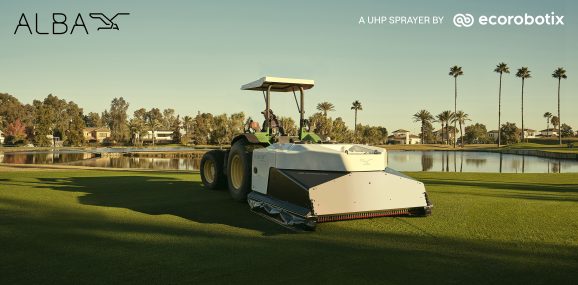
The greens themselves are small enough to manage by hand and by cultural program, so the opportunity sits on the larger cool-season areas that feed them. The ALBA ultra-high precision sprayer detects weeds from 4 mm, delivers a 3 cm² spray spot, and applies registered chemistry only to the plants its selective algorithms identify. In turf trials, Ecorobotix reports 70 to 90% herbicide reduction with this approach while holding playing-surface quality, and the platform is proven across 500+ agricultural clients in 20+ countries and now adapted for turf5.
For a conversion program, containing that surrounding Poa pressure protects the investment made on the greens. The same precision logic supports broader efforts to reduce turf management costs without compromising quality, and Ecorobotix projects return on investment within three years through input and labor savings. Courses weighing a Poa decision can request an on-course Turf Care audit that maps annual bluegrass pressure across the surrounds before committing to a path.
Making the call for your course
Poa annua on greens is a decision the course has to own, and the right answer is set mostly by climate and current stand. In a cool, maritime region with greens already predominantly Poa, embracing and managing the Poa surface is defensible and can be excellent for playability, and high-end courses routinely budget for the extra input load because that is what their members expect. In the hot, humid transition zone, where summer decline and disease pressure peak at the same time, the case for conversion away from Poa is far stronger.
Holding a mixed stand is often the costly middle ground.
Start by naming the situation: measure the Poa fraction on each green, weigh climate, winter risk and what your members expect to putt on, then price the three paths against the budget and the playing calendar. Decide the direction, commit the budget behind it, and fix the cultural conditions that drove the Poa share, or the surface will keep making the decision for you.
The practical next step is to map the Poa fraction green by green this season and quantify the surrounding pressure feeding it, so the path you choose next year rests on measured stand data rather than on last summer's worst memory.
FAQ
Is Poa annua bad for golf greens?
Not automatically. A pure, well-managed Poa annua green can putt superbly, and several US Opens have been played on Poa-dominant surfaces. The problems are agronomic risk rather than playability: Poa is prone to anthracnose, dollar spot, and summer patch, roots shallowly in summer heat, produces disruptive seedheads, and is more exposed to winterkill than bentgrass. Whether that risk is acceptable depends heavily on the climate.
Should I convert Poa annua greens to bentgrass?
It depends on climate, current Poa share, and budget. In the hot, humid transition zone, where summer decline and disease pressure are highest, the case for converting to creeping bentgrass is strong. In cool, maritime regions where Poa performs well, keeping and managing the surface can be the better call. Conversion is a multi-year commitment, so it only makes sense if the course can also fix the conditions that let Poa dominate.
What is the difference between Poa annua and bentgrass greens?
Creeping bentgrass is the lower-risk surface across most of the US: it roots more deeply, tolerates summer heat better, carries lower disease pressure, and is more winter hardy. Poa annua can match or beat bentgrass on pure putting quality in a suitable climate, but it roots shallowly in heat, produces spring seedheads, faces higher disease pressure, and is more prone to winterkill. Neither wins everywhere, which is why the choice is course-specific.
How do you convert Poa annua greens to bentgrass without closing them?
Gradual conversion uses a multi-year program instead of reseeding. Plant growth regulators such as paclobutrazol or flurprimidol suppress Poa more than bentgrass, and selective chemistry such as methiozolin shifts the stand toward bentgrass over one to two seasons while greens stay in play. It is slower than full regrassing and adds a recurring cost, and methiozolin registration varies by state, so the label decides whether it is an option on a given course.
Can you keep Poa annua greens and still get a good putting surface?
Yes, in the right climate and with the right program. A Poa-dominant green managed with aggressive seedhead suppression, a disease program tuned to anthracnose and summer patch, careful summer water and nutrition, and winter protection can deliver a championship-quality putt. The commitment is a permanently higher-input surface, which is why embracing Poa makes most sense where the greens already lean that way and the climate supports the species.
- United States Golf Association (USGA) Green Section (consulted 2026). "In Praise of Poa annua Greens". USGA Green Section Record. https://gsr.usga.org/ ↩︎
- United States Golf Association (USGA) Green Section (consulted 2026). "In Praise of Poa annua Greens". USGA Green Section Record. https://gsr.usga.org/
↩︎ - United States Golf Association (USGA) Green Section (consulted 2026). "Managing Annual Bluegrass Disease on Putting Greens". USGA Green Section Record. https://www.usga.org/course-care/green-section-record/managing-annual-bluegrass.html ↩︎
- Golf Course Management (GCM) (consulted 2026). "Converting Poa annua Greens to Creeping Bentgrass". GCM Online. https://www.gcmonline.com/ ↩︎
- Ecorobotix (2026). "ALBA Ultra-High Precision Sprayer for Golf Turf: Product Overview and Field Validation Data". https://turf.ecorobotix.com/ ↩︎